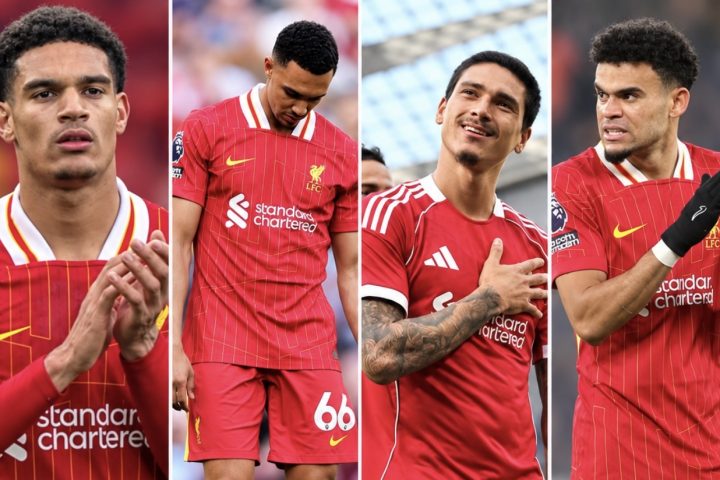


Liverpool face critical squad decisions ahead of their upcoming fixtures as Cody Gakpo manages a minor fitness concern while transfer target Alexander Isak remains central to tactical planning amid his own recovery timelines at Newcastle United. If you are tracking Liverpool’s attacking depth for upcoming match selections or tactical planning, monitoring training ground involvement 48 hours before kickoff provides the most reliable indication of availability.
💡 Matchday Tip: When evaluating team sheets for Premier League fixtures, monitor official press conference briefings held 24 to 48 hours prior to kickoff rather than mid-week training rumors to verify matchday squads.
Cody Gakpo Fitness Situation and Squad Impact
Cody Gakpo’s workload across domestic and European competitions requires continuous rotation to avoid muscle fatigue. When evaluating attacking depth, managing soft-tissue fatigue takes priority over rushing a player back for a single fixture.
Gakpo provides distinct tactical value through his versatility across the frontline, capable of operating from the left wing or through central channels as a link-up forward. If he misses game time, Liverpool’s tactical structure shifts significantly:
- Direct dribbling vs. possession retention: Gakpo offers hold-up play and tight-space passing, whereas alternative wide options favor direct transition runs.
- Defensive pressing structure: Gakpo initiates high-block pressing from the front; any substitute must replicate that defensive running output.
- Set-piece presence: Standing over 190 cm tall, Gakpo contributes substantially to zonal marking on defensive set-pieces.
Alexander Isak: Fitness Status and Long-Term Context
Alexander Isak remains an elite Premier League striker whose durability directly shapes competitive balances. While Isak represents Newcastle United, consistent transfer links connect him to top-tier Premier League clubs, including Liverpool, as teams evaluate future attacking reinforcement.
Isak has dealt with recurring groin and toe issues over recent campaigns, making his workload management a blueprint for how modern medical departments handle explosive forwards. You can observe distinct patterns in how clubs treat high-profile attacking assets recovering from lower-body strains:
Explosive Demands
Strikers reliant on rapid deceleration and sprint bursts require full recovery to prevent secondary hamstring or groin compensation.
Graduated Minutes
Medical protocols favor 20-to-30 minute substitute appearances over immediate 90-minute starts to assess biomechanical response.
Strategic Rest
High-value players are often rested during mid-week domestic cups to preserve freshness for top-flight league fixtures.
Comparative Availability and Role Profile
To understand the tactical and roster implications for competitive squads, review how both forwards function regarding match availability and physical output:
Step-by-Step Tactical Adjustment Framework
When key forwards face fitness doubts, decision-makers and coaching setups implement systematic steps to maintain offensive production without risking long-term muscle tears:
- Assess training ground data: Evaluate high-speed running metrics from the final collective session before setting the match squad.
- Adjust wide rotations: If Gakpo is restricted, deploy natural touchline wingers to stretch the opponent’s low block rather than relying on inverted passing.
- Modify substitute thresholds: Cap returning forwards at 60 minutes or reserve them for late-game impact when opposition defensive lines drop deeper.
- Rebalance central midfield: Introduce an advanced midfielder who can break into the penalty box to compensate for the goal threat of an absent striker.
Common Risks and Mistakes in Forward Management
Mismanaging player availability carries major performance and financial costs. You must account for common pitfalls when planning squad selections around minor injuries:
- Rushing soft-tissue returns: Bringing a player back before passing terminal sprint tests frequently results in grade-2 muscle tears and 6 to 8 weeks out.
- Ignoring match rhythm: Expecting match-winning sharpness immediately from the first start after a layoff often leads to wasted possessions and early substitutions.
- Over-relying on single scouting profiles: Evaluating potential transfer targets like Isak without factoring in historical availability records can compromise future roster budgets.
Decision Framework for Upcoming Selections
Before locking in tactical plans, apply this clear criteria checklist:
- Full training completed: Player is ready for 60+ minutes.
- Partial or modified training: Limit role to bench option (15 to 20 minutes maximum).
- Precautionary gym work only: Exclude entirely from matchday sheet to avoid reinjury.
Stay Updated on Premier League Team News
Follow tactical analysis, starting lineups, and verified injury reports ahead of every matchweek.
| Pos | Team | Pl | W | D | L | GD | Pts |
|---|---|---|---|---|---|---|---|
| 1 | Manchester City | 5 | 5 | 0 | 0 | +8 | 15 |
| 2 | Arsenal | 5 | 4 | 0 | 1 | +4 | 12 |
| 3 | Brighton & Hove Albion | 5 | 3 | 1 | 1 | +11 | 10 |
| 4 | Brentford | 5 | 2 | 3 | 0 | +6 | 9 |
| 5 | Leeds United | 5 | 2 | 3 | 0 | +4 | 9 |
| 6 | Liverpool | 5 | 2 | 3 | 0 | +3 | 9 |
| 7 | Everton | 5 | 2 | 3 | 0 | +3 | 9 |
| 8 | Hull City | 5 | 2 | 2 | 1 | +2 | 8 |
| 9 | Newcastle United | 5 | 2 | 2 | 1 | 0 | 8 |
| 10 | Chelsea | 5 | 2 | 1 | 2 | -2 | 7 |
| 11 | Ipswich Town | 5 | 2 | 0 | 3 | -4 | 6 |
| 12 | Manchester United | 5 | 1 | 2 | 2 | 0 | 5 |
| 13 | Nottingham Forest | 5 | 1 | 2 | 2 | -1 | 5 |
| 14 | Sunderland | 5 | 1 | 1 | 3 | -4 | 4 |
| 15 | Crystal Palace | 5 | 1 | 1 | 3 | -5 | 4 |
| 16 | Aston Villa | 5 | 1 | 1 | 3 | -5 | 4 |
| 17 | Bournemouth | 5 | 0 | 3 | 2 | -2 | 3 |
| 18 | Coventry City | 5 | 1 | 0 | 4 | -9 | 3 |
| 19 | Fulham | 5 | 0 | 2 | 3 | -3 | 2 |
| 20 | Tottenham Hotspur | 5 | 0 | 2 | 3 | -6 | 2 |