
The evening air in Madrid carried a sense of anticipation as two of Europe’s biggest football powers prepared to clash once again. Few matchups in the modern UEFA Champions League spark as much excitement as a showdown between Real Madrid and Manchester City.
In recent years, the two clubs have developed an intense rivalry, meeting repeatedly in high-stakes knockout encounters that often shape the outcome of entire seasons.
This latest encounter arrived in the round of sixteen, with Manchester City making the trip to the legendary Santiago Bernabéu Stadium in hopes of moving closer to the quarter-finals. The side guided by Pep Guardiola travelled to Spain with confidence.
Earlier in the tournament they had already secured a victory over Real Madrid at the same venue, proving they could cope with the immense pressure of playing in one of football’s most daunting stadiums.
That previous triumph had been particularly memorable. Goals from emerging midfielder Nico O’Reilly and star striker Erling Haaland helped City claim a vital win.
The performance served as a clear statement to the rest of Europe that the English champions were once again serious challengers for club football’s most prestigious trophy.
However, football rarely stays the same for long, and circumstances had shifted since that evening. Real Madrid were now led by a new manager, Álvaro Arbeloa. The former Madrid defender stepped into the position following the departure of Xabi Alonso.
For Arbeloa, the match represented a defining moment early in his managerial career. Going head-to-head with Guardiola, one of the most respected coaches in the sport, would quickly reveal how prepared he was for football’s biggest stage.
Guardiola, meanwhile, had ambitions of his own. The Catalan tactician had already lifted the Champions League trophy three times — twice with FC Barcelona and once with Manchester City.
Yet his hunger for success has never faded. Securing a fourth European title would elevate him even further among the greatest managers in the history of the game.
Despite their iconic status and rich history, Real Madrid entered the contest dealing with significant setbacks. Two of their most influential players were unavailable. French forward Kylian Mbappé was missing, while English midfielder Jude Bellingham was also absent.
Losing such key figures would test any squad, particularly in a Champions League knockout clash against one of Europe’s strongest sides.
Their domestic campaign had also been inconsistent. In the battle for the Spanish league title, Madrid found themselves trailing behind fierce rivals FC Barcelona.
As a result, the team faced growing pressure to deliver convincing performances in Europe and restore confidence among supporters.
Their route to the knockout phase had been challenging as well. Before reaching the round of sixteen, Madrid were forced into a play-off against SL Benfica. That additional hurdle had already stretched the squad and tested their resilience.
As kickoff approached, the Bernabéu crackled with energy. The stadium is renowned for producing unforgettable European nights, and the supporters were determined to inspire their team once again.
Thousands of fans dressed in white filled the stands, waving flags and chanting loudly as the players stepped onto the pitch.
From the opening whistle, Manchester City attempted to assert their trademark style. Guardiola’s side is famous for controlling possession, circulating the ball quickly, and patiently searching for openings in opposing defenses. Early on, City looked comfortable, moving the ball across midfield while waiting for chances to develop.
Real Madrid, though, were far from passive. Whenever they managed to break forward, they looked threatening. Their pace on the flanks and direct attacking approach always carries danger, especially in the Champions League where individual brilliance can decide matches.
One such moment nearly arrived early in the game. Brazilian winger Vinícius Júnior surged forward before threading a clever pass into the path of Brahim Díaz. Díaz managed to prod the ball toward goal, but City goalkeeper Gianluigi Donnarumma reacted swiftly, stretching to produce an impressive save and keep the score level.
The warning did little to disrupt City’s calm approach. They continued building their attacks patiently, often starting from deep positions. Midfielders exchanged short passes while the wide players attempted to stretch Madrid’s defensive shape.
Even so, the breakthrough remained elusive. At one stage, City came close when Bernardo Silva pounced on a loose ball near the edge of the penalty area. The Portuguese midfielder spun quickly and unleashed a shot, but it drifted just wide of the post.
Shortly afterward another opportunity emerged. City worked the ball cleverly into the box during a rehearsed set-piece routine.
As defenders blocked Madrid’s taller players, the ball rolled invitingly toward Antoine Semenyo. Just as he prepared to strike, however, the forward slipped on the turf and the chance disappeared.
City’s attacks frequently flowed down the left flank. Belgian winger Jérémy Doku repeatedly troubled Madrid’s defense with his pace and dribbling. On one occasion he glided past defenders before delivering a dangerous cross that forced a corner.
Another tense moment followed when O’Reilly sent a sharp cross into the penalty area. Madrid goalkeeper Thibaut Courtois had to react quickly, stretching to tip the ball away before a City attacker could connect.
For much of the early period, Manchester City appeared to control the tempo. They passed calmly, dominated possession, and pushed Madrid deeper into their own half. Yet football often punishes teams that fail to convert their dominance into goals.
That warning became reality.
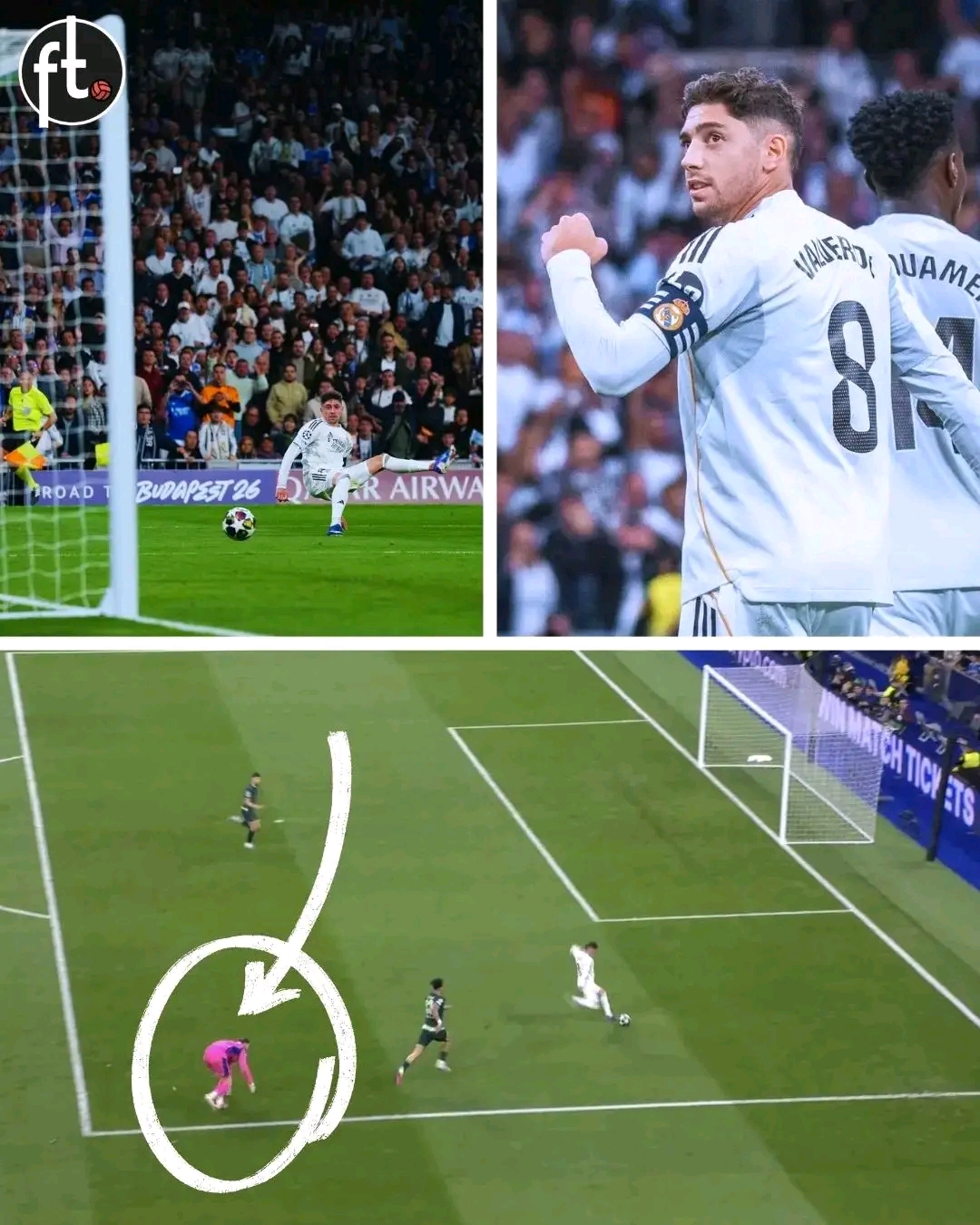
In the twentieth minute, Real Madrid launched a swift counterattack. Courtois sent a long pass forward from deep inside his half. The ball dropped near City’s defensive line.
O’Reilly misjudged its flight, allowing it to slip past him. Waiting behind was energetic Uruguayan midfielder Federico Valverde.
Valverde reacted instantly, racing onto the loose ball and pushing it beyond the advancing Donnarumma. With the goalkeeper beaten, he calmly finished from a tight angle.
The Bernabéu erupted.
After spending much of the match chasing possession, Real Madrid suddenly led 1–0. The atmosphere transformed instantly. Madrid supporters roared with delight while City players looked momentarily stunned.
Despite the setback, Manchester City tried to remain composed. Guardiola’s team has plenty of experience in difficult situations and continued moving the ball in search of an equaliser.
But the goal had given Madrid fresh confidence. Their players pressed more aggressively and attacked with greater belief. Momentum began shifting in their favor.
Soon another crushing blow arrived for City.
Around the twenty-eighth minute, Madrid launched another attack. Vinícius drifted inside, pulling defenders with him. Díaz carried the ball forward before sliding a smart pass into space.
Once again, Valverde was perfectly positioned.
The midfielder surged onto the ball and struck it powerfully. His low effort flashed past Donnarumma before the goalkeeper could react.
Goal.
Real Madrid 2–0 Manchester City.
The stadium exploded once more. Valverde sprinted toward the corner flag while teammates surrounded him in celebration. Two goals from the Uruguayan midfielder had completely transformed the contest.
For Manchester City, the situation suddenly looked extremely challenging. After controlling possession earlier in the match, they now faced a two-goal deficit before halftime.
Fans around the world reacted instantly on social media. Many praised Madrid’s clinical efficiency, noting how the Spanish giants often thrive in Champions League knockout ties even when under pressure.
Others criticized City’s defensive lapses, pointing out that even minor mistakes can be decisive in matches of this magnitude.
Still, the contest was far from over. Manchester City possess one of the most talented squads in world football and have produced dramatic comebacks before.
Guardiola paced along the touchline, shouting instructions. The manager understands that knockout ties are rarely settled in the first half. With significant time remaining — and another leg still to play — City would keep fighting.
Meanwhile, Real Madrid supporters sensed that another legendary European night might be unfolding. Over the decades, the Bernabéu has witnessed countless dramatic Champions League triumphs.
As the match progressed, both sides prepared for the next chapter in a rivalry that has shaped recent Champions League campaigns.
Whether Manchester City could respond or whether Real Madrid would strengthen their grip on the tie remained the question everyone was eager to see answered.
One thing, however, was certain: whenever these two European giants meet, drama is almost inevitable. Their latest clash once again delivered tension, excitement, and unforgettable moments — and the story of the night was far from finished.
