
Liverpool had to dig deep after falling behind, but they eventually powered their way to a convincing victory. Hugo Ekitiké stole the spotlight with a superb brace, scoring twice in quick succession just before the break, while Florian Wirtz also got on the scoresheet.
Despite conceding early to Alexander Isak or similar danger, the Reds showed real character to turn things around. It was a six-goal thriller packed with attacking quality, energy, and an Anfield crowd that roared back into full voice.
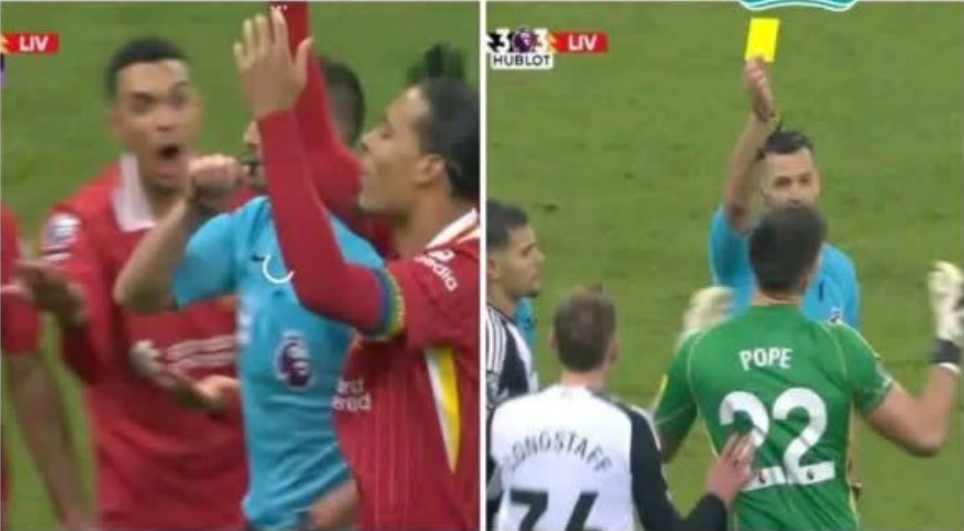
Still, as has become all too familiar, the aftermath was dominated not by the football, but by anger over refereeing decisions, leaving many supporters questioning the fairness of the contest.
Several moments in the game became flashpoints, with confusing decisions and inconsistent calls frustrating fans on both sides.
Liverpool supporters felt Newcastle escaped punishment for early fouls and rough play, accusing referee Simon Hooper of allowing the visitors too much leeway, including what they saw as play-acting and challenges that went unbooked.
Newcastle fans, meanwhile, argued the opposite, claiming the referee was hostile toward them, ignored clear decisions against Liverpool, and generally failed to control the match.
Complaints ranged from penalties that were never given to dangerous tackles being waved away, with judgments that seemed to change from one week to the next.
The controversy fits a wider trend this season, with reports suggesting VAR mistakes have increased significantly during the first half of the 2025–26 campaign.
Liverpool are said to be among the clubs most affected, with only Everton and Fulham reportedly suffering more from incorrect calls.
The Premier League’s Key Match Incidents panel has already acknowledged a series of errors across different matches, including games involving Newcastle, intensifying the debate around consistency.
Fans are increasingly asking why identical incidents are judged so differently, why reviews can drag on for minutes in some cases and be ignored in others, and how those delays drain momentum and excitement from the game.
Neutral observers added their voices, describing the match as yet another example of VAR killing spontaneity. Play stops, players hesitate, and what should be instinctive moments turn into tense waits while decisions are checked.
The referee’s display came under heavy scrutiny, with renewed calls for PGMOL to be held accountable as frustration over officiating standards continues to grow.
In a fixture of this magnitude, with rivalry, goals, and title implications, the officials should never be the main talking point.
Even though Liverpool emerged comfortable winners, many of their fans still felt key decisions went against them at crucial moments.
Newcastle supporters pointed to their team’s competitive start before the game unraveled, but once again, the refereeing debate drowned out the football.
The sense is that the sport deserves better: clearer rules, quicker and more consistent use of VAR, and meaningful reforms to restore trust.
There were flashes of why football is loved — goals, drama, and atmosphere — but VAR’s shadow hung heavily over the night. Unless the Premier League acts soon, more memorable matches risk being overshadowed by the same old officiating arguments.
